2018
Physics of meteor generated shock waves in the Earth's atmosphere: A review
Elizabeth A. Silber, Mark Boslough, Wayne K. Hocking, Maria Gritsevich, and Rodney W. Whitaker
Advances in Space Research · 62(3), 489–532
Physics & planetary science
I combine theory, numerical modeling, and field observations to study shock waves, atmospheric entry, and the formation of impact craters on rocky and icy worlds.
Senior R&D ScientistSandia National Laboratories
Adjunct Research ProfessorWestern University
About me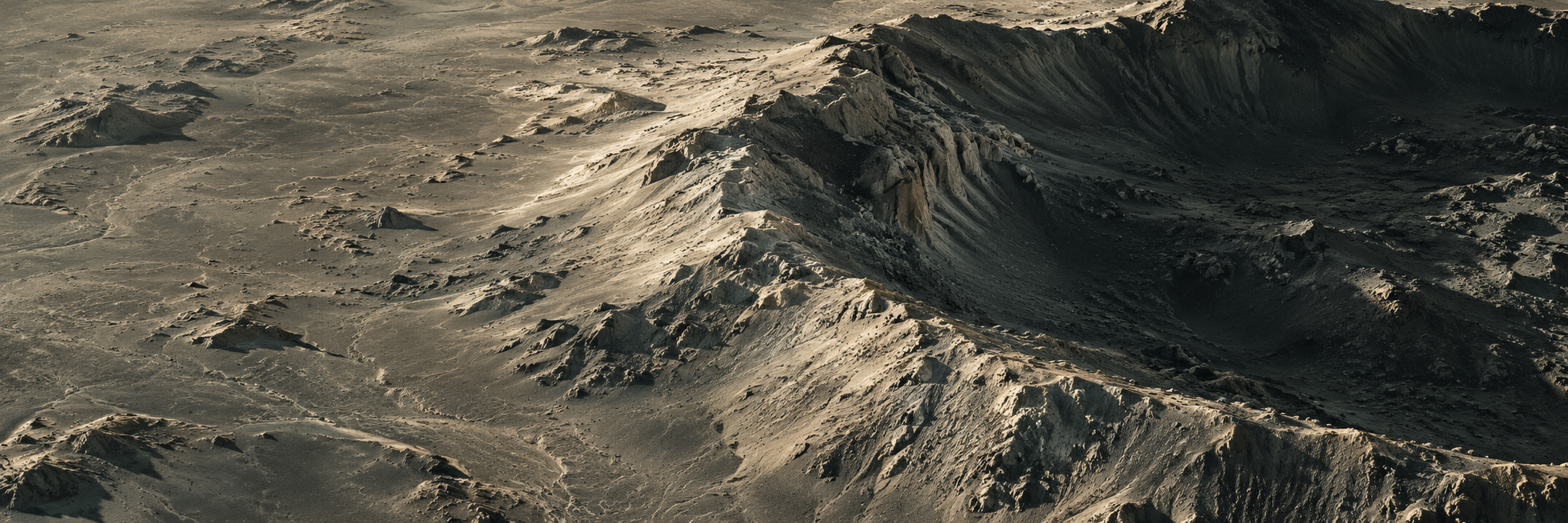
Research themes
Using low-frequency sound to investigate energetic events and their passage through the atmosphere.
Characterizing atmospheric entry, fragmentation, and the energy released by extraterrestrial objects.
Using shock physics simulations to investigate how impacts shape rocky surfaces and icy worlds.
Studying returning spacecraft as opportunities to better understand natural meteors.
Infrasound interpretation
A focused review of bolide infrasound explores the challenges of processing and interpreting acoustic observations, with case studies connecting measurement to physical understanding.
Read the paperElizabeth A. Silber, Mark Boslough, Wayne K. Hocking, Maria Gritsevich, and Rodney W. Whitaker
Advances in Space Research · 62(3), 489–532
Elizabeth A. Silber, Douglas O. ReVelle, Peter G. Brown, and Wayne N. Edwards
Journal of Geophysical Research: Planets · 114, E08006
Elizabeth A. Silber and Peter G. Brown
Journal of Atmospheric and Solar-Terrestrial Physics · 119, 116–128